Active Cases

We endeavour to keep you as informed as possible within the guidelines of proper procedure.

Greta Fiedler Greta Fiedler

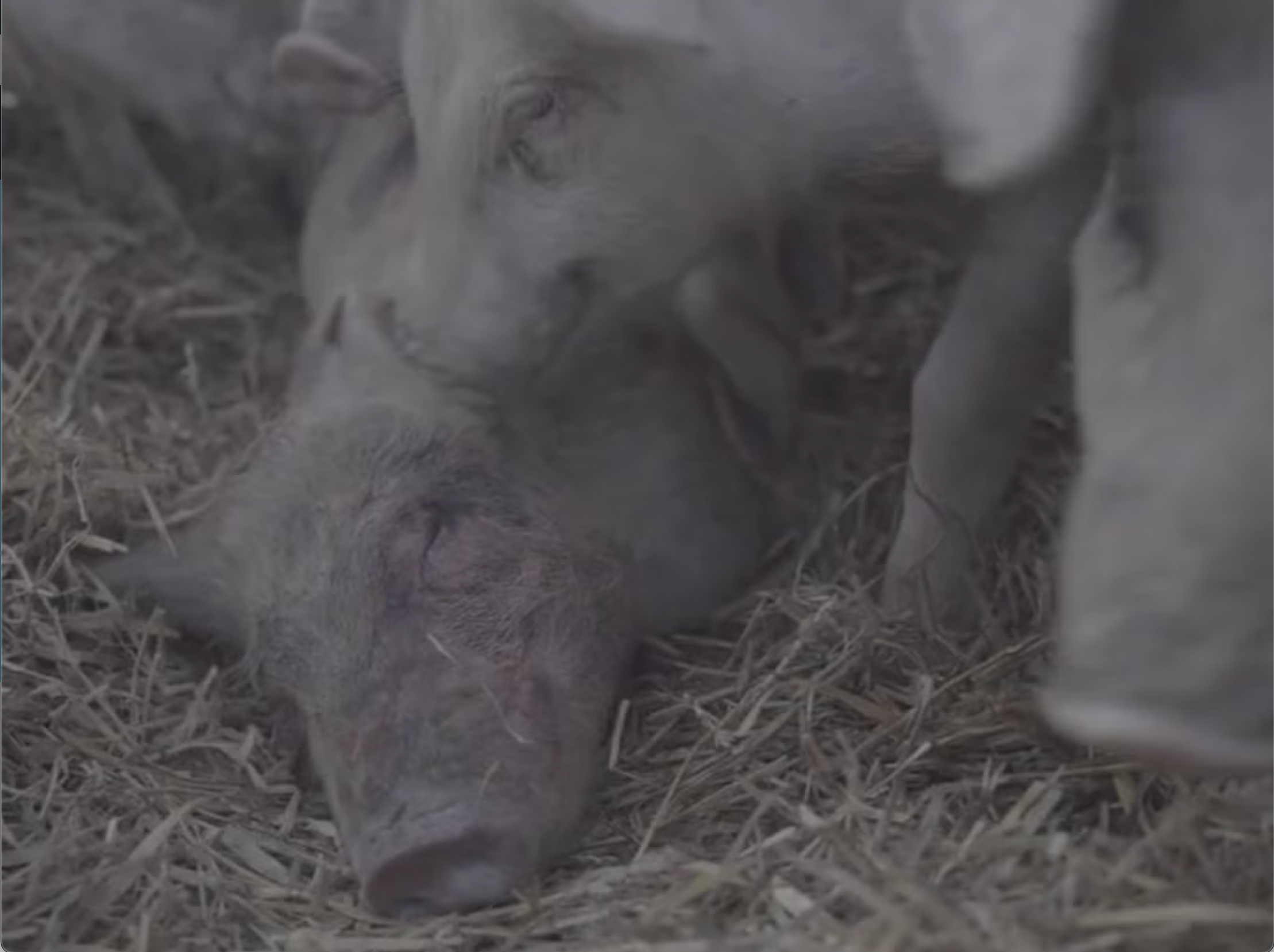
Cranswick Farm And Farm Manager Face 30 Charges

Cranswick Country Foods PLC subsidiary and Farm Manager charged with animal welfare offences at Lincolnshire’s North Moor pig farm

Cranswick Country Foods PLC subsidiary and Farm Manager charged with animal welfare offences at Lincolnshire’s North Moor pig farm

Lawyers for Animals (LFA), a registered charity, has commenced the prosecution of Elsham Linc Limited, a company operating a commercial pig farming premises, at North Moor Farm, Market Rasen, Lincolnshire, and their Farm Manager, Andy Pentecost, in relation to alleged animal welfare offences.

The charges follow an investigation into conditions and practices at the farm between February and March 2024, including evidence obtained through an undercover investigation and subsequent expert veterinary review.

Elsham Linc Limited, a subsidiary company of Cranswick Country Foods Plc, and their Farm Manager, Andy Pentecost, of the North Moor Farm site, have been summonsed to appear at court. Both are due to attend Nottingham Justice Centre on 26 August 2026.

Elsham Linc Limited faces 23 offences contrary to the Animal Welfare Act 2006, the Welfare of Animals at the Time of Killing (England) Regulations 2015 and the Animal By-Products (Enforcement) (England) Regulations 2013. Andy Pentecost faces 7 offences contrary to the Animal Welfare Act 2006 and the Welfare of Animals at the Time of Killing (England) Regulations 2015.

Prosecutor Statement

Ayesha Smart, Legal Director of Lawyers for Animals said:

“This prosecution concerns serious allegations relating to the treatment and welfare of pigs at a commercial farm.

Having carefully considered the available evidence, we have concluded that there is sufficient evidence to bring these charges and that it is in the public interest to prosecute.”

We remind all concerned that criminal proceedings against Elsham Linc Limited and Andy Pentecost are now active.

  • The defendants are entitled to a fair trial. It is important that there should be no reporting, commentary, or sharing of information which could in any way prejudice these proceedings.

    Note to editors

  • Elsham Linc Limited (Company number 05525289) of Crane Court, Hesslewood Office Park, Ferriby Road, Hessle are the Company at North Moor Farm, Market Rasen, Lincolnshire.

  • Andy Pentecost was, at the material time, Farm Manager at Elsham Linc Limited’s North Moor Farm.

  • Charges arise out of Animal Justice Project’s investigation in 2024.

  • Elsham Linc Limited is charged with 23 offences: 

    • 7 x s4 Animal Welfare Act 2006 - causing unnecessary suffering to pigs

    • 2 x s5 Animal Welfare Act 2006 – permitting routine mutilations (teeth grinding and tail docking)

    • 4 x s9 Animal Welfare Act 2006 – failing to ensure welfare needs

    • 9 x reg 30(1)(c) Welfare of Animals at the Time of Killing Regulations 2015 – failure to restrain animal during killing and killing using a non-mechanical percussive blow

    • 1 x reg 17 Animal By-Products (Enforcement)(England) Regulations 2013 - Failure to properly store or dispose of a dead sow.

  • Andy Pentecost is charged with 7 offences: 

    • 3 x s4 Animal Welfare Act 2006 - causing unnecessary suffering to pigs

    • 2 x s5 Animal Welfare Act 2006 – permitting routine mutilations (teeth grinding and tail docking)

    • 2 x reg 30(1)(c) Welfare of Animals at the Time of Killing Regulations 2015 – failure to restrain animal during killing and killing using a non-mechanical percussive blow

  • The offences are alleged to have taken place at North Moor Farm, Market Rasen LN8 3JF between 19 February and 7 March 2024 (and related dates). 

  • The prosecution has been brought by Lawyers for Animals, represented by solicitors at Schofield Sweeney LLP. 

  • The function of LFA is not to decide whether a person is guilty of a criminal offence, but to make fair, independent and objective assessments about whether it is appropriate to present charges for a criminal court to consider.

  • The LFA assessment of any case is not in any sense a finding of, or implication of, any guilt or criminal conduct. It is not a finding of fact, which can only be made by a court, but rather an assessment of what it might be possible to prove to a court, in accordance with the Code for Crown Prosecutors and Code of Conduct for Private Prosecutors.

Read More
Greta Fiedler Greta Fiedler

The Government is facing legal challenge for classifying animal testing as ‘key national infrastructure’

Judicial Review challenge filed 2 March 2026 by Lawyers for Animals and Maria Iriart for November 2025 Public Order Act Amendment

Judicial Review challenge filed today, 2 March 2026, by Lawyers for Animals and Maria Iriart for November 2025 Public Order Act Amendment


The charity, Lawyers for Animals, and Maria Iriart, an animal rights activist who campaigns with Camp Beagle, today filed a judicial review claim seeking to challenge Regulations passed by the Home Secretary to classify the life sciences sector, including animal testing facilities, as “key national infrastructure”.

The regulations mean that protestors “interfering” with such facilities could be subject to severe criminal sanctions, including up to a year in jail. And this is regardless of whether the interference is “intentional” or “reckless”. 

The regulations follow lobbying from MBR Acres, which breeds beagles for use in regulatory experiments. Only 14% of the public thinks it’s acceptable to breed beagles for experimentation, thus resulting in significant peaceful protest against the industry, such as Camp Beagle.

Background

Protections for “key national infrastructure” were introduced by section 7 of the Public Order Act (“POA”) 2023, to protect certain transport and energy sites, such as motorways and power stations, from protest. Whilst introducing the POA 2023, the government said, “These measures will only prevent a small minority of individuals from causing serious disruption to the daily lives of the public.” 

The Secretary of State has the power to extend protections to new types of infrastructure if they become “key national infrastructure” over time (for example, as energy sources change) by passing secondary legislation to amend the s.7 list - a “Henry VIII” power.

In November 2025, Home Secretary, Shabana Mahmood, put forward Regulations to add life sciences companies to the list. To justify the measures, she argued, without disclosing any evidence, that protest activity at such sites could threaten the UK’s pandemic preparedness. She additionally asserted that, without the amendment, organisations in the sector might shut down their UK operations. That justification is contrary to the UK’s own Animal Welfare Strategy — released in November 2025 — that plans to phase out animal testing “in all but exceptional circumstances.”

The Involvement of MBR Acres

The Government met with MBR acres on 18 July, 17 September, and 2 October 2025, prior to introducing the amendment in November. 

In addition, an FOI response revealed that the meeting on 17 September 2025 involved Lord Vallance (Minister of State at the Department for Science, Information and Technology). At that meeting, MBR Acres warned Lord Vallance about “the impact of protests on their company” and “the devastating consequences on the Life Sciences Sector and wider public-health ecosystem, if they fail.” 

The Parliamentary Process

The Regulations were passed under the “affirmative procedure”, which means both Houses of Parliament had to sign off on them, but were not able to scrutinise them or amend them in the way they could have with primary legislation. 

The House of Commons approved the Regulations on 14 January 2026, despite an earlier debate in which a number of MPs were harshly critical of the measures. In the House of Lords, Natalie Bennett put forward a “fatal motion” to stop the Regulations.   A fatal motion is an exceptionally rare procedure designed to prevent proposed regulations from becoming law. The motion failed and the Regulations passed, despite extensive criticism from some Peers:

Baroness Miller called them “the clearest abuse of legislative powers that I can remember in my 27 years here” and “an absolute affront to the parliamentary process and a further dangerous move in undermining a right to protest”.

  • Natalie Bennett herself noted that the scope of the Regulations was potentially vast and had not been defined: “Ministerial responses to parliamentary questions have failed to rule out online activity or information sharing as not falling within scope. That puts NGOs and campaign groups at risk of criminalisation for lawful and utterly reasonable advocacy of boycotts, for public awareness campaigns and for education programmes.”  

  • Baroness Grender noted that the Regulations apply to sites with licences under the Animals in Scientific Procedures Act 1986, which are (under s24 of the list) mostly kept confidential – so protesters may not even know whether the Regulations apply to a particular site or not.

  • Lord Kerr of Kinlochard noted that: “In all our debates, no one ever mentioned laboratories. When we were passing this Act, animal welfare did not come up. We thought we were dealing with oil, gas, rail, road and air, because that is what Ministers and the Bill said… If the pharmaceutical industry is key national infrastructure, what about food production or distribution, the NHS or radio and television transmitters? All three cases seem more plausible than a life sciences factory or laboratory.”

The Regulations came into force on 12 February 2026. They have already been used to arrest two individuals peacefully protesting outside MBR Acres’ Wyton site.

The Legal Case

The claimants say the life sciences sector is not “key national infrastructure”. By adding to the list, the claimants allege the Secretary of State has exceeded her powers under the POA 2023. They challenge on two grounds: 

The amendment falls outside the scope of  the power Parliament conferred on the Secretary of State to expand the list of “key national infrastructure”, because: 

  • Animal testing and pharma sites are not "infrastructure", much less “key national” infrastructure; and

  • Where there is doubt about the scope  of a Henry VIII power, especially one whose exercise expands the scope of a criminal offence and interferes with fundamental rights (to which Parliament has already struck a careful balance in primary legislation) the narrower interpretation must be preferred.

The Regulations are irrational because: 

  • They are redundant, in that existing law already deals with the Secretary of State’s stated concerns, and she has not pointed to anything currently lawful that the Regulations are intended to criminalise;

  • There is no evidence that the risks the Secretary of State has warned of (to the UK’s pandemic preparedness etc) are real, nor that the Regulations would do anything to address them if they were.

The claimants are represented by Helen Fry (a senior associate at Bates Wells) and Ted Loveday (a barrister at Maitland Chambers).

The claimants are seeking permission to pursue a judicial review challenge in the High Court of England and Wales (Administrative Court). The Secretary of State will have 21 days to respond formally to the challenge.

Quotes

Rob Pownall, a trustee at Lawyers for Animals, says: “[T]he Regulations could potentially make it unlawful simply to hold a sign outside an animal testing site in a way that interferes, even in a minor or indirect way, with the operation of the site. The lack of clarity on how section 7 of the POA 2023 will apply to “life sciences infrastructure” will at the very least create a chilling effect on people’s willingness to engage in such protests. I also fear that the Regulations, by prioritising business interests over the fundamental right to protest, set a dangerous precedent. If animal testing sites are “key national infrastructure”, I am concerned about which other controversial sectors – many of which find protest inconvenient - could be added to the list through secondary legislation (by this Government or by a future administration).”

Maria Iriart says: “I have dedicated a significant part of my life to peacefully protesting against the use of animals in regulatory tests. The fact that I do not know what kind of behaviour will now constitute “interference” makes the prospect of continuing to protest quite scary. I have no idea if holding up a placard, using a loudspeaker, making the wrong kind of gesture, wearing a costume, or even posting on social media, could now be a serious criminal offence. That is a worrying prospect for all of us involved in protesting at MBR, and lots of activists I have spoken to in the wider movement are worried too.” 

Ted Loveday, the barrister representing the claimants, said in court filings: “There is a fundamental lack of logic behind these Regulations. When the Public Order Act 2023 went through Parliament, nobody suggested that life sciences was “key national infrastructure”. The concept cannot be so wide that the Government can pick and choose any companies or sectors that they consider important. This country already has a vast amount of criminal legislation relating to protests. These new Regulations have concerning implications for the freedom to engage in legitimate criticism of life sciences businesses.”

Helen Fry, the solicitor representing the claimants, said: “It’s constitutionally vital that “Henry VIII” powers are used appropriately, and not to avoid Parliamentary scrutiny of controversial measures. The right to protest is fundamental, and the claimants’ evidence about the chilling effect the regulations have already had on activists’ ability to make their voices heard is deeply concerning.” 

Please direct any queries about the challenge to:

Read More